 The Mediterranean Sea’s unique biodiversity is under mounting pressure from multiple environmental stressors – legacy and emerging contaminants, marine litter, underwater noise, light pollution, invasive species, and widespread habitat degradation- all accelerating under a changing climate. In this context, the Interreg Euro-MED MIRAMAR project is rapidly becoming a central driver of coordinated regional efforts to understand and mitigate cumulative impacts on vulnerable ecosystems.
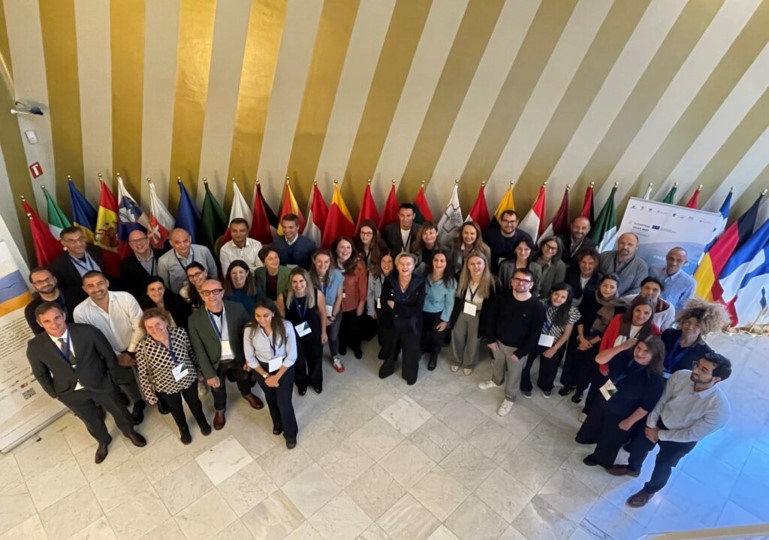
On 30 October, the MIRAMAR consortium held a dedicated project meeting, strategically organised back-to-back with the regional Plastic Busters Initiative gathering hosted at the Union for the Mediterranean (UfM) headquarters in Barcelona. This timing ensured strong alignment between MIRAMAR’s ongoing work and the broader regional momentum to confront the escalating environmental challenges facing the Mediterranean basin.
Strengthening Synergies Across the Plastic Busters Community
The Barcelona event marked a new milestone for the Plastic Busters Initiative, bringing together two sister Interreg projects, MIRAMAR (Interreg Euro-MED) and MedPROACT (Interreg NEXT MED). Combined, they reinforce a decade-long regional effort to curb marine pollution and ecosystem degradation under a climate change scenario.
Building on this milestone (read more here), the MIRAMAR meeting on 30 October focused on consolidating progress across work packages, deepening collaboration among project partners, and aligning technical tasks with regional policy developments. The meeting highlighted the project’s strategic contribution within the overall Plastic Busters Initiative by expanding the scope from marine litter to a holistic assessment of cumulative impacts on key Mediterranean ecosystems.
A Holistic Approach to Ecosystem Protection
MIRAMAR — Monitoring cumulative Impact to guide Mitigation and RestorAtion in the MediterrAnean Region — is a 33-month project engaging partners from Albania, Croatia, France, Greece, Italy, and Spain across nine pilot areas. It focuses on three ecologically critical systems:
- Seagrass meadows,
- Wetlands, and
- Habitats of endangered species.
During the 30 October meeting, partners advanced joint work on:
- Monitoring interactions between multiple stressors,
- Testing harmonised environmental data collection methods,
- Identifying nature-based solutions to restore degraded ecosystems,
- Preparing community-driven Living Labs to strengthen local engagement.
MIO-ECSDE plays a pivotal role in the project by leading the work package dedicated to identifying solutions to multiple stressors and catalyzing change through the establishment of living labs. Drawing on its extensive capacity-building experience, it will also develop training materials and tools, and carry out pollutant and stressor testing in the Amvrakikos Gulf (Greece).
A Natural Evolution of a Regional Movement
MIRAMAR draws on the strong foundation laid by previous projects, including Plastic Busters MPAs, Plastic Busters CAP, and COMMON, all endorsed under the UfM’s flagship Plastic Busters Initiative. Extending the scope from marine litter to cumulative impacts represents the logical next step in safeguarding the Mediterranean’s ecological integrity and climate resilience.
Looking Ahead
With fieldwork, Living Lab activities, and training programmes in the pipeline, MIRAMAR is moving into full implementation. The synergies created through the back-to-back UfM event has reinforced the project’s role in shaping Mediterranean-wide solutions grounded in evidence, cooperation, and innovation. This work ensures that MIRAMAR remains deeply embedded in the science–policy–society interface — a hallmark of the Plastic Busters Initiative since 2013.
Read this in French here